

In most pets, entropion and ectropion cannot be prevented, and surgery is what corrects them, though the harm a rolled or drooping lid does to the eye in the meantime is largely avoidable. In dogs the lid shape is usually inherited, built into the skull, the skin folds, and the set of the eye, so nothing at home stops it in a predisposed puppy. Cats are different, since the lid more often rolls later in life, set off by a painful or infected eye, by scarring, or by the weight loss that lets the eyeball sink deeper in the socket. What you can control in either species is how long a lash drags across the cornea or a dry patch of it stays exposed, and a lid repaired before that surface scars gives the best outcome.
Twin Maples Veterinary Hospital in Dayton is open seven days a week, which matters when an eye that looked mildly irritated on Friday is worse by Sunday. You should not have to guess whether a rolled or drooping eyelid is cosmetic or painful, and our AAHA-accredited hospital can examine it and tell you which one you are dealing with. When the lid does need to be reset, surgical correction is planned around your pet and what that eye needs, and a repair done ahead of any corneal scarring usually settles the problem for good. If one eye stays red, runs discharge down the face, or a lower lid sits away from the surface, schedule a closer look.
What a Rolled or Drooping Lid Does to the Eye
- Entropion rolls the eyelid inward so hair rubs the cornea, while ectropion lets the lower lid sag outward and leaves the inner lid tissue exposed.
- In dogs both conditions usually trace back to inherited face shape, and in cats a rolled lid more often follows a painful eye, old scarring, or weight loss.
- Squinting, tearing, and thick discharge are pain signals, not cosmetic quirks, and a cornea that scars before the lid is fixed can keep those changes permanently.
- Surgery is a lasting fix for most pets, and the earlier a lid is reset, the smaller the repair and the more comfortable the eye afterward.
What Happens at the Appointment When an Eyelid Isn't Sitting Right?
The visit starts with a hands-on look at how each lid sits against the eye while your pet is awake and relaxed. A few standard ocular tests fill in what the naked eye cannot: a tear production measurement, a fluorescein stain that lights up any break in the cornea, and a pressure reading that rules out glaucoma as the reason for the squint.
Topical anesthetic does a lot of the heavy lifting from there. A drop that numbs the surface tells us whether a lid is rolling because of how it's built or because the eye hurts and your pet is clamping down. When the margin relaxes into a normal spot once the pain is gone, that's spastic entropion, and the whole plan changes.
The rest of the exam covers:
- Lid position at rest and in motion: how much of the margin touches the surface with each blink, and whether the two sides match.
- The lash line: extra hairs growing from the wrong spot can scrape a cornea even when the lid itself sits correctly.
- The corneal surface: pigment, old scars, and fresh damage each say something about how long this has been going on.
- The opposite eye: these conditions are often symmetrical, and a second eye that looks fine today can need the same repair later.
Is the Lid Rolling In or Drooping Out?
Entropion is the lid rolling inward, so hair drags across the cornea with every blink. Ectropion runs the opposite direction, the lower lid sags away from the eye and leaves a droopy pocket of pink inner lid tissue exposed to dust, wind, and bacteria. Same eyelid, opposite problems, and some faces carry both.
| Entropion | Ectropion | |
| What the lid does | Rolls inward toward the surface | Sags outward, away from the surface |
| What you see | Squinting, tearing, a margin you can't quite see | A slack lower lid with pink tissue showing |
| Main risk | Friction, ulcers, scarring, pigment | Drying, trapped debris, repeat infections |
| Timing in dogs | Often obvious in the first year | Often present young, loosens further with age |
| Timing in cats | Usually middle age or later | Uncommon, generally after injury or surgery |
Plenty of eyes have more than one thing going on. A dog with a rolled lid can also have poor tear production, and a cat with a folded margin often has a surface that's already inflamed. We sort out what's layered on top before anyone talks about surgery dates.
Which Breeds Run Into Eyelid Trouble?
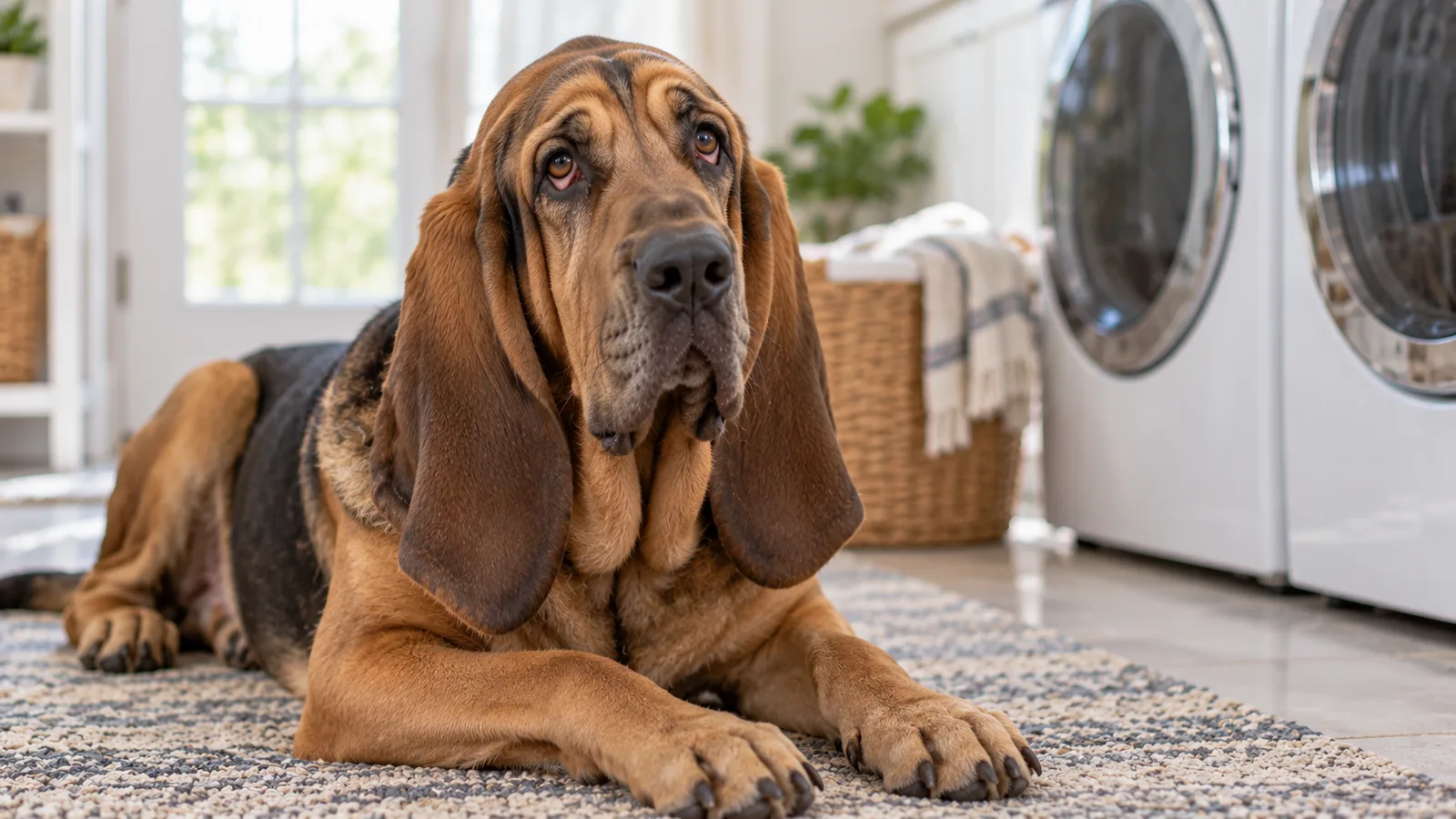
Eyelid trouble shows up most in Shar-Peis, Chow Chows, Bulldogs, Rottweilers, and Labradors with entropion, and in Bloodhounds, Basset Hounds, Saint Bernards, and Cocker Spaniels whose heavy lower lids sag into ectropion.
- Dogs: Entropion sits near the top of the list of hereditary eyelid conditions, which is why breed clubs discourage breeding affected dogs and why the littermates of an affected puppy are worth a look even if their eyes seem fine.
- Cats: Cats are not exempt, and flat-faced breeds like Persians, Himalayans, and Exotic Shorthairs carry the shortened muzzle and prominent eyes that crowd the lid margins, block normal tear drainage, and set the stage for an inward roll.
- Beyond the breed list: Most eyelid disorders trace back to facial structure, though scarring from an old injury, age-related loss of tissue tone, and chronic inflammation can pull a previously normal lid out of position later.
Pain is its own category. An eye that hurts for any reason, such as a scratch, a foreign body, or a flare of conjunctivitis, makes a pet squeeze the lids shut, and that spasm can tip a borderline lid inward. If you've brought home a breed with a reputation for this, bring it up at routine wellness exams, especially during the first year while the face is still changing shape.
What Are the Signs, and What Happens If Nothing's Done?
Squinting, excessive tearing, pawing at the face, and holding one eye shut in bright light are signs of eye pain, not quirks of personality or a pet having an off day. Add a rust-colored tear stain running down the face, a lid margin you can't see, or a lower lid hanging away from the surface, and the picture gets clearer.
- Entropion left alone: Constant lash friction wears through the clear front surface of the eye, and corneal ulcers that start as a shallow scratch can deepen into scarring, pigment deposits, or a perforation that puts vision at risk.
- Ectropion left alone: That exposed pocket collects debris and stays wet, so eye discharge shifts from an occasional clear film to a thick, recurring crust that points to ongoing irritation or a brewing infection. Dayton's dusty summers and dry, heated winters both give a slack lid more to deal with.
- Either one, over time: The longer the surface stays damaged, the more scar tissue the repair has to work around.
One thing not to do while you wait. Never reach for leftover drops from another pet or a human allergy product: a steroid ointment on an ulcerated cornea can turn a treatable scratch into a deep one, and nothing over the counter changes where a lid sits. An Elizabethan collar keeps a rubbing pet from turning a scratch into an ulcer before you get in. If an eye is squinting, weeping, or held shut, reach us any day of the week instead of giving it a few more days.
Does Every Case Need Surgery Right Away?
Not every rolled lid goes straight to the operating room. A margin pushed inward by pain, or by a puppy whose face hasn't finished growing, can often be held in a better spot temporarily, while a lid that's structurally wrong needs a permanent repair. Age, cause, and the condition of the cornea decide which path fits.
Can We Buy Time With Tacking?
Temporary eyelid tacking buys time: a few small sutures roll the lid outward for two to three weeks while a growing puppy's face fills out, and the tacks can be replaced if the lid rolls back in before the anatomy settles. For a young dog it's often the difference between one clean repair later and a cornea that scars in the meantime. The same logic helps a pet whose squint is pain-driven: relieve the pain, hold the margin steady, then judge what's really left to fix.
What Does Permanent Repair Involve?
Permanent repair turns on one judgment call: how much skin and muscle to lift out near the lid margin. Take enough and the edge rotates back into place and stays there. Take too much and the lid can no longer close over the eye, the mirror image of the first problem. That measurement, not the incision, is the demanding part of eyelid surgery. A Shar-Pei's folds, a Cocker Spaniel's loose lower lid, and a cat's narrow margin each call for a different approach. Our veterinary team walks you through the plan chosen for your pet before a date goes on the calendar.
Why Do Cats Need a Different Plan?
Entropion in cats usually shows up in middle age or later rather than in kittenhood, and it often travels with chronic conjunctivitis or corneal disease, so the plan has to address the eye surface and the lid position at the same time. That can mean combining two techniques on one lid plus treating whatever's inflaming the surface. Cats are also quieter about discomfort than dogs, and the one who's merely a bit squinty at breakfast may be well past mild.
What Does Surgery Day Look Like for Your Pet?
Eyelid repair happens under general anesthesia, because the work is measured in millimeters and a moving patient isn't an option. The procedure itself is usually short. Here's our side of the door:
- Confirming the plan: we assess the lid awake and again asleep, since tissue relaxes under anesthesia and the margin can sit differently.
- An anesthetic plan built for your pet: age, breed, body condition, and pre-anesthetic bloodwork shape the drugs we choose, and our in-house lab work means that screening happens here, not at a separate appointment.
- Pain control ahead of the need: local and systemic medication goes on board before the first incision. Waking up is smoother for it.
- Continuous monitoring: heart rate, blood pressure, oxygen, and temperature, plus a person whose only job is watching your pet.
- Waking up: recovery happens somewhere warm and quiet, and pets head home once they're steady on their feet.
How Long Is Recovery After Eyelid Surgery?
Recovery after eyelid surgery takes a couple of weeks. Most pets feel much better within a few days, though the lid settles more slowly. Plan on restricted activity, an Elizabethan collar, and a recheck for suture removal.
What Should the First Few Days Look Like?
The first few days should be quiet and closely watched. The cone stays on: one swipe at a rug or a couch cushion opens a suture line.
- Normal: mild swelling and bruising around the lid, a little clear or slightly pink discharge, and some squinting for a day or two.
- Worth a call: thick yellow or green discharge, a separating suture line, swelling that worsens after the third day, an eye held tightly shut, or a pet who's quiet and off food.
A pet who watches the bottle coming will duck. Administering eye medications gets easier when you approach from above and behind. Rest the heel of your hand on the top of the head. Any sudden movement then carries the bottle along with it. Leave five full minutes between two different products. If something looks off and a photo would say it better than words, send us a message.
When Do the Sutures Come Out?
Sutures come out at a recheck, usually around 10 to 14 days.
| Stage | What you'll notice | What we handle |
| The first 48 hours | Bruising and swelling at their peak | Pain control, cone on, quiet rest |
| Days 3 to 7 | Comfort returns, discharge thins | Last medications finished, incision checked |
| Around 10 to 14 days | Edges holding on their own | Recheck, sutures out for most pets |
| Weeks 3 to 6 | Puffiness gone, the margin settles | Final lid position assessed |
| Months out | Cornea still healing, scars may lighten | Eyes reviewed at later visits |
Now and then a lid needs a small revision, most often on a heavily wrinkled face that keeps shifting as swelling goes down. We take a cautious amount of tissue the first time for that reason: too little is easy to adjust, too much is not.
How Well Does This Surgery Work in the Long Run?
In the long run, this surgery works well for the large majority of patients. Once the margin sits where it belongs the rubbing stops, the surface gets its first real chance to heal, and most dogs and cats look visibly more comfortable within a week or two. Four things shape how an individual eye does:
- A lid folded in for years heals differently than one caught early: the degree of malposition going into surgery sets the ceiling.
- Pigment and scarring already laid down may lighten without clearing: the cornea's starting condition shapes its finish.
- A puppy's skull is still moving: a repair made before the face finishes growing sometimes needs revisiting later.
- The cone, the drops, and the quiet weeks do real work: home care during healing is not a formality.
Pain relief and protection from further damage are what this surgery reliably delivers. Vision already lost to deep scarring may not return in full, the honest reason we'd rather meet a rolled lid at six months old than at six years old. If your dog is shown, check the breed registry's rules first, since some registries expect surgery that alters appearance to be disclosed.
Your Eyelid Surgery Questions, Answered
Can drops or ointment fix a rolled eyelid on their own?
Medication treats what the lid is doing to the eye, not where the lid sits. Lubricating ointment protects an irritated surface, an antibiotic clears an infection, and pain relief can break the squint-and-spasm cycle long enough for us to see the true lid position. What none of it can do is move the margin, so when anatomy is the problem, anatomy is what has to change.
Will my dog's face look different after the repair?
The change is usually too subtle for anyone but you to notice. The aim is a lid that opens and closes normally, not a new expression, so we remove the smallest amount of tissue that does the job. On a very wrinkled face the change can be visible up close, and it reads as a more open, relaxed eye rather than a surgical one. What families comment on most is behavior: less squinting, fewer tear stains, and a dog who stops turning away from bright light.
Do both eyes usually need surgery at the same time?
Both eyes often need the repair, because these problems come from the shape of the face and are frequently symmetrical, so a lid rolled on the right side means the left one deserves a hard look even if it seems milder. Handling both during a single anesthetic event is generally kinder and keeps the two sides balanced. When only one side is truly affected, we repair that one and recheck the other at future visits.
Clear, Comfortable Eyes for Dayton Dogs and Cats
An eye that hurts doesn't improve by being watched. Find out whether the lid is the cause, then fix it before the cornea pays for the delay. Twin Maples Veterinary Hospital sees a lot of these faces in Dayton, and the pets whose lids were reset early tend to forget the whole episode ever happened. If an eye is red, weepy, or held shut, schedule a surgical consultation and we'll tell you plainly what you're dealing with.


Leave A Comment