


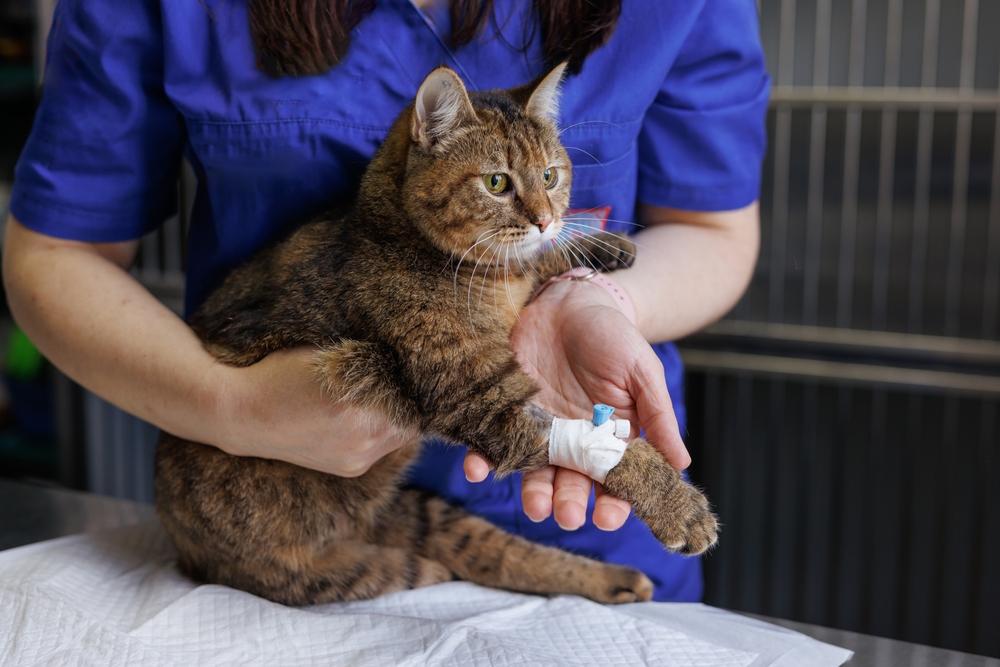
If your dog or cat is breathing faster at rest, tiring early on a familiar walk, or has a nosebleed that will not stop, immune-mediated blood disease needs to be ruled out today, not at the next open appointment. IMHA and ITP both begin with the same immune error: the body tags its own blood cells for removal. IMHA clears out the red cells that carry oxygen, so organs start running short. ITP clears out the platelets that seal small leaks, so bleeding has nothing to stop it. From the outside the two look nothing alike.
Twin Maples Veterinary Hospital, an AAHA-accredited practice, is open seven days a week in Dayton, so pale gums or sudden weakness in your dog or cat on a Sunday morning does not have to wait until Monday. Our in-house diagnostics start with a complete blood count that measures red cells and platelets directly, and cytology, digital radiography, and ultrasound let us look for an infection or other trigger behind the immune reaction. If you’ve noticed a change in your pet that has you worried, set up a visit with us rather than waiting it out.
Auto-Immune Blood Diseases (IMHA and ITP) in 4 Points
- IMHA and ITP start from the same immune mistake, but one destroys red blood cells and the other destroys platelets, so the two look nothing alike from the outside.
- Pale gums, fast breathing at rest, pinpoint bruises, or a nosebleed with no injury behind it mean your dog or cat needs to be seen that day.
- Tick-borne infections can trigger these diseases or mimic them closely, so testing for them belongs in the workup from the start.
- Most pets diagnosed early and treated steadily do recover, though medication tapers and recheck bloodwork usually run for several months.
What Makes the Immune System Attack Its Own Blood Cells?
The mistake at the center of immune-mediated diseases is one of identity, the immune system tags the body’s own cells as invaders and takes them apart. In dogs and cats, the cells caught in that error are most often red blood cells, platelets, or both at once.
Where the error comes from splits these cases into two camps, and that split drives everything after. Primary disease means a careful search turns up no trigger, so medication aims straight at quieting the immune response. Secondary disease means something set the reaction off, an infection, a tumor, a toxin, or a drug, and that cause has to be treated alongside immunosuppression.
| IMHA | ITP | |
| Cell under attack | Red blood cells, which carry oxygen | Platelets, which plug small leaks |
| What families notice | Weakness, fast breathing, pale or yellow gums, dark urine | Bruising, pinpoint red dots, nosebleeds, blood in urine or stool |
| Biggest danger | Organs starved of oxygen, plus abnormal clotting | Bleeding into the gut, abdomen, chest, or brain |
| First-line treatment | Immunosuppression, usually with anti-clotting medication | Immunosuppression, sometimes with a platelet-boosting drug |
Can a Tick Bite Really Set Off an Immune Blood Disease?
Several tick-borne infections either trigger immune destruction of blood cells or mimic it closely enough to fool an initial workup. Treating what looks like primary disease while an infection runs underneath is how cases relapse after a promising start, so screening comes first.
- Babesia: Babesia gibsoni lives inside red blood cells and spreads dog to dog through bite wounds as readily as it does by tick, which is why it turns up most often in Pit Bulls and Greyhounds and can look exactly like primary IMHA on the first round of bloodwork.
- Ehrlichia and Anaplasma: both drive platelet numbers down, and a long-standing Ehrlichia infection can suppress the marrow so red cells, platelets, and white cells drop together.
- Rocky Mountain spotted fever and Lyme disease: spotted fever damages small blood vessels themselves, producing bruises that resemble ITP, and a dog carrying one tick-borne organism frequently carries a second.
Ohio ticks stay busy long past the first frost, so testing belongs in the workup for any dog or cat with unexplained anemia or low platelets, and it’s worth folding into wellness and preventive bloodwork for pets who spend real time outdoors.
What Happens When Red Blood Cells Come Under Attack?
In immune-mediated hemolytic anemia, red blood cells are destroyed faster than the bone marrow can replace them, and every organ that depends on them for oxygen starts running short. Early on the shortage is subtle. Left alone, it becomes collapse.
Broken-down cells release a yellow pigment that tints gums, ear flaps, and the whites of the eyes, and urine can darken to the color of strong tea. The spleen and liver work overtime clearing debris, so some pets feel tender in the belly. This can unfold over a week or over two days, and the fast version is what makes waiting risky.
What Are the Early Signs of IMHA?
The first changes are easy to write off as a slow day. Healthy gums are bubblegum pink, so pale or jaundiced gums, chalky white, gray, or tinged with yellow, mean the red cell count has already fallen far enough to show at the lip line.
- Sleeping more, or quitting halfway through a route they usually finish
- Breathing faster than normal while resting or asleep
- Gums, inner ear flaps, or eye whites that look white, gray, or yellow
- Urine the color of tea or cola
- Appetite fading over a few days
Breed matters here. Cocker Spaniels carry the best-documented risk, and English Springer Spaniels, Old English Sheepdogs, Poodles, and Irish Setters turn up more often than chance would predict, with middle-aged females overrepresented. Cats develop this less often than dogs, and when they do, an infection or a tumor is usually hiding behind it.
What Sets Off Secondary IMHA?
Secondary cases have a cause sitting underneath, and finding it keeps the disease from returning once medication tapers. Diseases caught from ticks are one of the biggest causes. Other reasons might include:
- Infections: A dog who drinks from a puddle or a slow creek can pick up leptospirosis from water carrying infected wildlife urine. In cats, hemotropic mycoplasma attaches directly to red blood cells and flags them for destruction, which is why an outdoor cat gets screened for it before anyone calls the anemia primary.
- Cancer: Lymphoma and hemangiosarcoma can both drive red cell destruction, sometimes before any mass is obvious on an exam.
- Viruses: Feline leukemia virus is the classic feline example, and it changes both the plan and the outlook.
- Toxins, drugs, and venom: Zinc from a swallowed penny damages red cells directly and often shows up on radiographs, certain antibiotics and other medications can prime the reaction in susceptible pets, and snake bites can do the same.
Why Abnormal Clotting Is the Bigger Threat
The cruel twist of this disease is that abnormal clot formation, not uncontrolled bleeding, is one of the leading causes of death in affected dogs, which is why anti-clotting medication and close monitoring are part of the plan from day one. All that cellular debris tips the clotting system into overdrive, and a clot can lodge in the lungs or a limb while the anemia is still being treated. Sudden hard breathing, a leg that goes cold or weak, a collapse, or new pain with nothing to explain it means call us right away during our open hours, or head for the nearest emergency hospital if we’re closed.
What Does It Look Like When Platelets Are Destroyed?
Platelets are the cell fragments that plug the small breaks blood vessels sustain every day, and immune-mediated thrombocytopenia destroys them fast enough that bleeding starts where nothing was injured at all. What shows on the surface is usually the smaller half of the problem. A dog who seems bright but passes black tarry stool is losing blood where nobody can see it.
What Bleeding With ITP Looks Like at Home
Most of the visible clues sit on surfaces you can check in about thirty seconds.
- Pinpoint red or purple dots, called petechiae, on the belly, gums, or inner ear flaps
- Larger bruises on skin that was never bumped
- Nosebleeds with no injury behind them
- Urine that looks pink or red, or stool that is black and tarry
- A trimmed nail or small scrape that oozes far longer than it should
Cats conceal this better than dogs, and many show nothing beyond pale gums and an unusually quiet afternoon, so a quick look at the belly is worth doing any time yours seems off.
What Triggers ITP in Dogs and Cats?
ITP divides into primary and secondary the same way IMHA does. Tick-borne organisms lead the secondary list, especially Ehrlichia and Anaplasma, followed by heartworm disease, distemper, leptospirosis, several medications including some antibiotics and sulfa drugs, and cancers such as lymphoma.
Recent vaccination shows up in the veterinary literature as a rare association, and it deserves a straight answer instead of a shrug. That risk is small, and the illnesses vaccines prevent are not. Distemper and leptospirosis can both destroy platelets on their own, so keeping core vaccines current removes far more danger than it adds.
What if Red Cells and Platelets Fall Together?
Sometimes the immune system goes after both targets in the same pet. When red cells and platelets fall together, the result is Evans syndrome, and treatment has to hold both fronts at once. These cases need frequent bloodwork and dose changes, often several times in the first couple of weeks.
Which Signs Mean Your Pet Needs to Be Seen Today?
Fast, effortful breathing while a pet is lying still, open-mouth breathing in a cat, or any sudden change in breathing rhythm signals respiratory distress, and that needs care within the hour, not tomorrow morning. Pale gums, collapse, and bleeding that won’t stop sit in the same category.
- Gums that aren’t pink: white, gray, muddy, or yellow means oxygen delivery has already slipped.
- Weakness or collapse: your pet can’t rise, or wobbles after a few steps.
- New bruising or petechiae: purple patches or pinpoint dots that appeared without an injury.
- Dark, red, or tea-colored urine, or black tarry stool: both point to blood where it doesn’t belong.
- Bleeding that keeps going: nose, gums, or a small wound that won’t seal.
One thing to skip on your way in: human pain relievers. Aspirin, ibuprofen, and naproxen all interfere with platelet function and can turn a bleeding problem into an emergency.
Twin Maples Veterinary Hospital is open seven days a week, and same-day sick visits exist for exactly this situation. Call before you leave the house when you can, so a room is ready when you pull in.
How Do We Figure Out Which Disease Your Pet Has?
Diagnosis opens with a hands-on exam and a complete blood count, then a blood smear read under the microscope, which shows whether red cells, platelets, or both are being cleared out. Everything after that is a hunt for the trigger sitting behind it. The history you bring matters as much as the numbers: new medications, a tick pulled off two months ago, a swimming trip, a swallowed coin, or travel outside Ohio can point the workup in a direction the bloodwork alone won’t.
- Reticulocyte count: shows whether the marrow is answering by releasing young red cells.
- Coombs test: looks for antibodies stuck to red cells, and this one goes to an outside laboratory.
- Chemistry panel and urinalysis: check liver and kidney function and how much pigment is spilling into urine.
- Tick-borne disease panel: rules out the infections that both mimic and cause these diseases.
- Imaging: radiographs and ultrasound look for a tumor, a swallowed metal object, or an enlarged spleen.
Running in-house bloodwork, cytology, and digital radiography here means the first answers arrive while your pet is still with us, so treatment can begin at that visit instead of waiting on an outside courier.
How Are IMHA and ITP Treated?
Treatment runs on two tracks at once: medication to shut down the immune attack, and support for the body while counts rebuild. Secondary cases add a third track, clearing whatever set the reaction off. Steroids do the early heavy lifting, usually prednisone or prednisolone, with a second immunosuppressive drug added when the response is slow. Blood transfusions buy time rather than treating the immune attack itself, restoring oxygen-carrying capacity while immunosuppressive medication takes hold. The veterinarians managing these cases map out the best treatment plan for your pet based on the diagnosis and a conversation with you.
| Treatment | What it does | Where it fits |
| Corticosteroids | Slow the immune destruction of blood cells | First-line for both IMHA and ITP |
| Second immunosuppressive | Adds control and lets steroid doses come down | Slow responders, or pets struggling with side effects |
| Anti-clotting medication | Lowers the risk of clots forming | Most IMHA patients, started early |
| Vincristine | Prompts the marrow to release platelets faster | ITP with dangerously low counts |
| Blood transfusion | Restores oxygen-carrying capacity while drugs work | Severe anemia, referred to a hospital with a blood bank |
| Intravenous immunoglobulin | Draws the immune attack away from platelets | Critically low platelets, referred |
| Therapeutic plasma exchange | Filters antibodies out of circulation | Severe or drug-resistant IMHA, at a specialty center |
| Targeted antibiotics | Clear an infection fueling the reaction | Confirmed tick-borne or bacterial trigger |
| Splenectomy | Removes the organ destroying the most platelets | Refractory ITP after medication fails |
Transfusions, plasma exchange, and round-the-clock nursing aren’t things we provide on site. When your pet needs that level of support, we stabilize them here and get you to a hospital that offers it. Recovery is a months-long project either way, with each dose reduction earned by a recheck.
Can You Lower the Risk of an Immune Blood Disease?
Nothing takes primary immune disease off the table, but a meaningful share of secondary cases trace back to a tick-borne infection, and those are preventable. Year-round tick prevention paired with a hands-on check after time outside closes the gaps seasonal dosing leaves wide open.

Prescription products outperform shelf brands both in how reliably they kill ticks and in how precisely they’re dosed for weight. The right pick differs between a 12-pound cat and an 80-pound retriever who swims most weekends, so ask us which product fits your pet rather than guessing in an aisle. A skipped month is the gap that usually matters, and a recurring phone reminder solves most of them.
Vaccine preventable diseases, like leptospirosis, distemper, and feline leukemia, are the second biggest way to prevent a secondary trigger for an immune disease. Regular wellness bloodwork, especially in pre-disposed breeds like Cocker Spaniels, can show us signs of declining blood counts before they land in critical territory, preventing a 2 a.m. trip to the ER even if they can’t prevent the disease itself.
Common Questions About IMHA and ITP in Pets
Will my dog be on medication for the rest of their life?
Usually not. Most dogs taper off over four to eight months, with each dose reduction based on a recheck showing counts holding steady. Some pets need a low maintenance dose long-term, particularly after a relapse, and a handful stop medication entirely. The taper is slow on purpose, since cutting the dose too fast is one of the most common reasons a stable pet crashes again.
Can cats get IMHA, or is this mainly a dog disease?
Cats do develop it, just less often than dogs, and their version is more likely to be secondary. Feline leukemia virus, hemotropic mycoplasma, and lymphoma are the usual culprits, which is why a workup for a cat leans hard on infectious and cancer screening. Cats also mask illness well, so pale gums, hiding, and a flat appetite may be the only clues you get.
My pet had ITP after a vaccine. Is it safe to vaccinate again?
That’s a conversation, not a blanket rule. When platelet destruction followed a vaccine closely, we review which vaccines your pet genuinely needs based on lifestyle and local disease risk, space them out, and sometimes use antibody titers instead of automatic boosters. Rabies is legally its own discussion. What we don’t recommend is dropping protection altogether, since distemper and leptospirosis destroy platelets far more reliably than any vaccine does.
Your Next Step If You’re Worried About IMHA or ITP
A diagnosis like this lands hard, and the worry that rides along with it makes complete sense. Most dogs and cats caught early and treated steadily do recover, and what usually tips the outcome is someone noticing pale gums or a bruise that shouldn’t be there and acting on it that day. If your pet is showing any of those changes right now, call Twin Maples Veterinary Hospital in Dayton before you head over, or go straight to the nearest emergency hospital if we’re closed. When the shift is slower, book a visit and we’ll sort out together what’s driving it.


Leave A Comment